Dear Journalism,
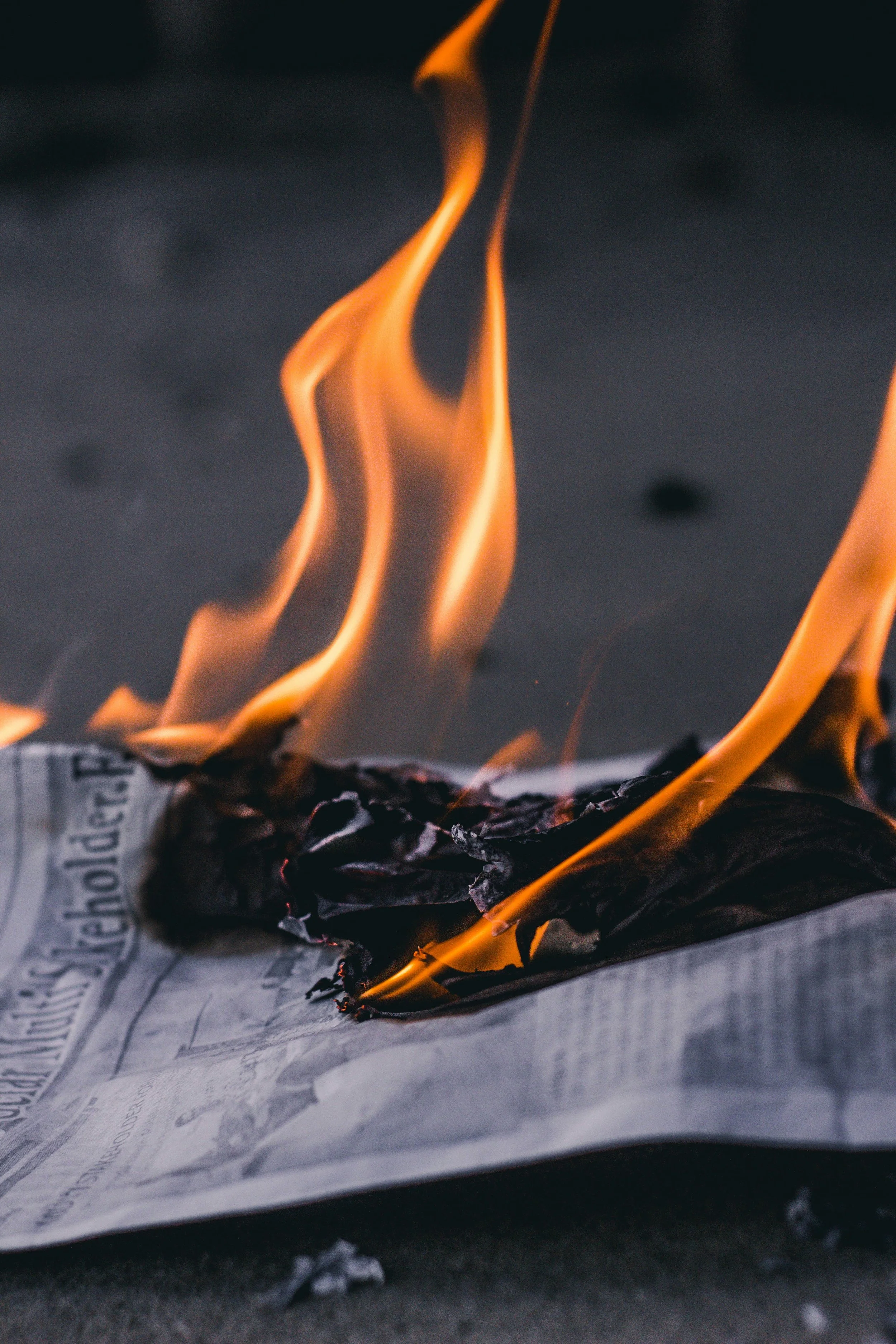
I hoped I would never have to write this letter, but the day has come: I'm not in love with you anymore.
It feels so sad to write that sentence, journalism. And I know you’re thinking, it can’t be true.
But I've actually been feeling this way for a while now. For example, last week, after having the misfortune to hear a project manager's careless sentence in a late-night nothing of a committee meeting in a hot, airless room on the top floor of City Hall, I ended up in the even more uncomfortable position of trying to explain to a hospital PR team why I was using that single comment to spin an entire front-page story smearing their name, and trying to explain to my editor why I was not raring to rip out their throats as his personal attack dog.
I know what you’re thinking, journalism. It was a pretty sketchy remark, which in the end the hospital was not able to explain in a way that made sense. You’re thinking, that’s just business as usual. We tell the story. We fight the good fight. We stick it to the man. There’s blowback, but we get through it, because that’s what we do. That’s who we are.
But this isn’t who I am, journalism. This isn’t me. This isn’t us. At least, it didn’t used to be.
Do you remember how it all began, journalism? I was a sophomore in college, scrolling through the Craigslist jobs section, and I saw a posting for an internship at the Wall Street Journal. Instantly I saw myself striding down the sidewalk, clutching my long, narrow reporter’s notebook, press pass bouncing on my chest, Lois Lane on her way to break the story of the year. It was love at first sight.
It wasn’t, really. It was opportunism. I needed a glamorous summer job, something I could add to my resume with a flourish to dispel the growing whispers of doubt about my future, something that would impress a certain boy who lived in New York City.
But one word in that ad brought me up short: “portfolio.” I didn’t have one. I had only just learned what a clip was. So I set my eye on the campus paper Skidmore News, whose official slogan was, “We put out every Thursday.”
I started taking on three, four stories a week—on the boys’ soccer team’s autumn season, the new exhibit at the library, the English department chair’s new book. My volume, and the fact that no one had seen my face, earned me a nickname: Ghostwriter. By the spring, I had a job as SkidNews spread editor. Do you remember those Wednesday nights, journalism? Sitting bleary-eyed at the Mac at the back of the newsroom as Ben Folds blasted over the speakers, eating pizza, flowing text and placing photos, pedaling home as the sun came up. It was like Offred said in Handmaid’s Tale. We thought we had problems. How were we to know we were happy?
By the summer, I had my portfolio—and an internship, not at the Wall Street Journal, which of course had never responded to my application, but at my hometown paper, the Acton-Boxborough Beacon. The next fall, I was promoted to news editor at the Skidmore News, and started interning at the daily headquartered in my college town, the Saratogian.
When I graduated, I took a job at the Chelmsford Independent, two towns over from my mom’s house. I wasn’t going to stay, journalism. I was a Writer. I’d churned out short stories since the first grade, finished my first novel when I was fifteen, written papers that made professors weep. And I was basically a veteran reporter. I was meant for better things than a small-town weekly.
I wasn’t expecting my editor, Jesse, to call me into his office my first week, point at the lede to my story on Monday’s Board of Selectmen meeting, and say, “This is dreadful.”
For my next story, I pulled out all the writerly stops—only to get my draft back, stripped bare. Gone were my sly puns, my alliterative jewels, my clever turns of phrase. Do you remember what Jesse said then, journalism? The words that pierced me to my very soul? “Stop pirouetting. Just tell it like it is.”
So for the first time in my life, I stopped Writing. And I started paying attention.
I don’t know if I ever told you, journalism, that I had always had this secret fear—that I wasn’t actually interested in the world. That I didn’t care about anything. That I was defective. Asleep.
But in Chelmsford, I started to wake up. To the neighbors protesting a housing development that threatened a neighborhood’s historical character. To the local man who fell off a ladder and was paralyzed. To the mother of a Marine who killed himself.
It was more than waking up. It was coming alive. I covered a local businessman’s attempt to sue all the officials in town, wrote a three-part series on group homes for the developmentally disabled, and won awards for government and social issues reporting from the New England Newspaper and Press Association, which also named me their Rookie of the Year.
I was promoted to cover Arlington, and then Somerville. Do you remember those days, journalism? Hanging out at City Hall waiting for election results, crashing campaign parties, running after elusive city officials and politicians, walking up to people I didn't know, sitting at kitchen tables listening to amazing ordinary tales, finding that story no one else had.
Eyeing job openings at the Patriot Ledger and MetroWest Daily News, wanting nothing more than to work my way up to the ranks of Boston reporters whose names I ran my fingers over in the Sunday paper. I knew deep in my soul, that we would be together forever.
But then there were the cuts. First the swing reporters. Then the sports writers. Then the photographers. There was that sexual assault at the boys’ soccer camp, which broke Friday night, forcing me to spend my weekend asking school officials and parents questions none of them wanted to answer. There was that election week I didn’t sleep for fifty-two hours, and while driving down Mass. Ave., actually forgot what day it was and where I was going.
There was the four alarm fire, and the neighbor who told us the police were looking for an arsonist. I was on top of the world, journalism—I broke the story, and our competitors were retweeting it. Then, when the neighbor called back to confess he had made it up, it all came crashing down. I had to retract my first story. I spent the whole afternoon walking in the rain, then drank too much whiskey at the newsroom happy hour and ended up in an ambulance.
You were my first love, journalism. And for a long time, I was loyal to you because of that. I kept thinking of the good days, thinking we could get them back. But I can’t help but think of that teacher I interviewed who burned out on the job. Stress, boredom, deadness, that certainty that you’re living the same day over and over again, the same week, the same year. Doing a worse and worse job. Not getting excited at the little things anymore. Needing more and more coping mechanisms and excuses to get through the day. Dreading going into work every morning. Dreaming of something else every night.
I'm tired, journalism. Tired of the fights. Tired of being my editor's lieutenant in a war I don't know if I believe in. Tired of picking up the phone and hearing how little the person on the other end wants to be talking to me -- almost as little as I want to be talking to them.
I can’t deny it any longer. You’re killing me, journalism. My brain. My soul. My body. And I can’t stay any longer.
I'm sorry, journalism. Maybe it would be different if I wasn't introduced to you through a shit company that gives us shit pay and shit equipment and as many unfunded mandates as the state government, and leads us to the inescapable conclusion that we are doing a shit job that anyone else could do and that everyone could do without. (Can you remember when I didn't sound so mean when I talked to you?) But this is the way it is.
I won’t go right away. I’ll stay through most of campaign season. But at the end of August, I'm hanging up my press pass, packing my things and moving out. I don't know what I'm going to do without you. There's going to be a lot of crying and a lot of time to fill. I don't know if I'll ever recover. I'll always miss you. But given the number of my friends you have chewed up and spit out, journalism, I have the sneaking suspicion that you won't miss me.
With regret, regard, and no more love,
M